material and finish sample approval
How to Approve Material and Finish Samples for an Exhibition Stand
Cover: a topic-specific illustrative visualisation.
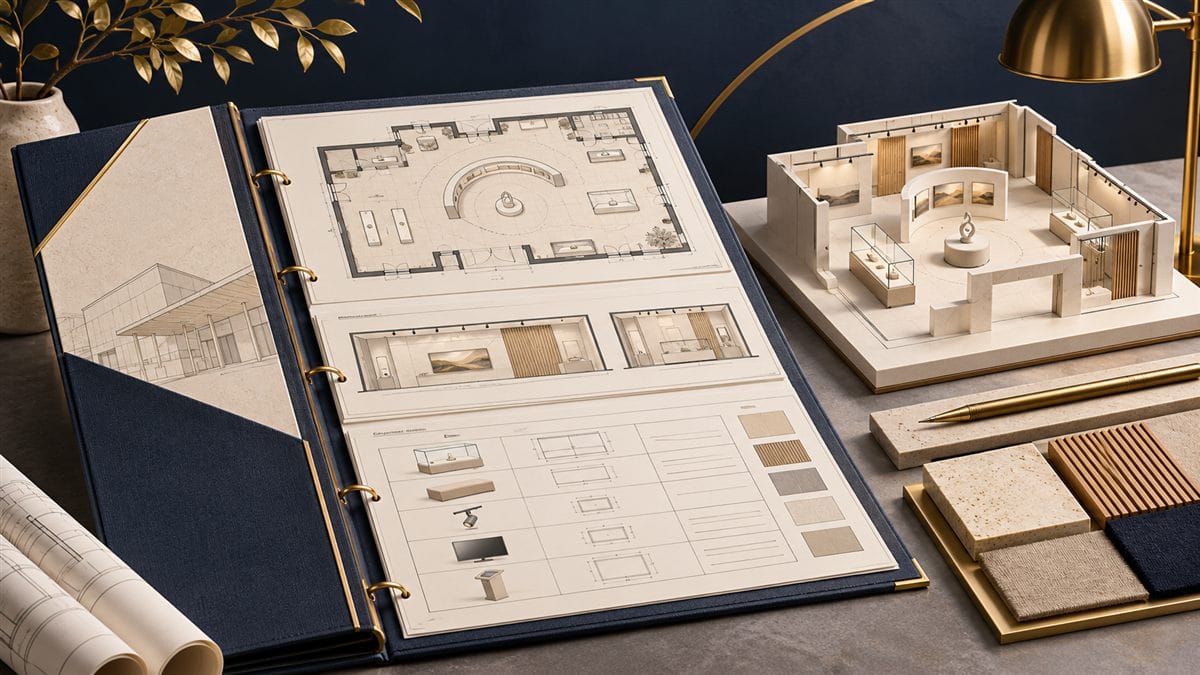
A material and finish sample approval turns a visual preference into a reference that the design and production teams can use. A rendering can communicate a design direction, but it does not show exactly how a painted surface, textured board, printed panel or metal finish will appear in the exhibition hall.
The purpose is not to promise that every photograph and surface will look identical. It is to agree what is being approved, under which viewing conditions, and how the production team will refer to that decision.
Choose a representative sample
Identify the visible surfaces that matter most to the brand or the product display. Request a sample that represents the proposed substrate, surface preparation, finish and relevant detail. A colour chip alone may not explain the texture of the finished panel or how its edge will be treated.
Where two materials meet, review them together. A finish that looks suitable in isolation may behave differently next to a reflective metal, a printed graphic or a bright display. Ask the producer which aspects the sample represents and which aspects still need a separate decision.
Agree how the sample will be viewed
Review the sample under a lighting arrangement relevant to the stand and alongside important neighbouring materials. Look from a normal viewing position as well as close up. Distinguish a colour decision from approval of texture, sheen, joints or workmanship; accepting one does not automatically settle the others.
Remote review may be necessary, but phone cameras, screens and ambient light can change what the client sees. Use photographs to document the sample and discuss its details, while recording the limits of a photo-only decision. For a critical finish, agree how a physical reference will reach the decision-maker.
Keep a simple approval record
- Sample code
- A unique identifier visible on the sample and in the project register.
- Proposed application
- The stand surface or component to which the decision applies.
- Material and finish
- The producer’s description, including the substrate and the relevant finish reference.
- Review context
- The lighting, adjacent materials and any limitations of a remote review.
- Decision
- Approved, revise or rejected, with specific comments rather than an ambiguous “looks fine”.
- Traceability
- Approver, date, photograph reference and the location of the retained physical sample.
A comment such as “less glossy than sample S-02” is more useful than “make it more premium”. Record the revised sample as a new version so it cannot be confused with the rejected one.
Use a real project to discuss material relationships
The Bona Home HOMETEX 2026 project shows a material palette in a completed stand context. Its photographs can help a conversation about the relationship between surfaces, dark elements and display areas. They are not evidence that a particular sample test was performed, nor a substitute for approving your own proposed materials.
Carry the approved reference into production
Ensure that the production team can access the current approved sample and its application record. If the proposed product, substrate, finish process or supplier changes, identify whether a new sample is needed before the affected work proceeds. Do not quietly substitute an alternative and leave the client to discover the difference at handover.
At the workshop or site review, compare the installed or produced surface with the agreed reference under appropriate conditions. Technical suitability, required material documentation and safety checks are separate responsibilities for the qualified team; an aesthetic sample approval does not certify them.
Include sample decisions in the design programme
Identify the critical finishes and the person who can approve them when planning our custom stand design and production service. Send your stand brief with brand references, important product surfaces and any sample-review needs. Agreeing these decisions before the relevant production stage helps avoid an unresolved aesthetic choice becoming a late change.