Eurasia Window, Door and Glass Fair 2026 Exhibition Stand Guide
Eurasia Window, Door and Glass Fairs 2026 will bring the complementary window, door, façade and glass industries together at Istanbul Tüyap from 21 to 24 November. For a technical manufacturer, the stand must do more than look architectural: it needs to prove product performance, make full-scale systems easy to compare and give international buyers a clear path from demonstration to commercial discussion.
The concurrent fairs cover PVC, aluminium and composite systems, hardware, profiles, machinery, façade solutions and architectural glass. That breadth attracts manufacturers, importers, fabricators, contractors, architects and distributors with different technical questions. A generic hospitality-led booth can miss the opportunity; the product must remain the centre of the visitor journey.
This guide is written for international exhibitors looking for a reliable exhibition stand builder in Istanbul. It explains how to turn doors, windows, profiles and glass samples into a structured specification environment while keeping installation, safety and Tüyap logistics under control.
Why this fair can generate qualified project and distribution leads
The official 2025 results report 700 exhibitors, 66,632 visitors, exhibitors from 26 countries and visitors from 165 countries. These figures indicate a highly international sourcing environment, but volume alone does not guarantee useful leads. The stand must quickly identify whether a visitor is an architect, fabricator, dealer, contractor or importer and direct the conversation accordingly.
Window and door systems are selected through evidence: dimensions, thermal and acoustic performance, opening mechanism, hardware, glass configuration, certifications, lead time and installation support. When these points are integrated into the display, the stand becomes a working sales tool rather than a decorative background.
How to design a window, door and glass exhibition stand
1. Display full-scale systems in working condition
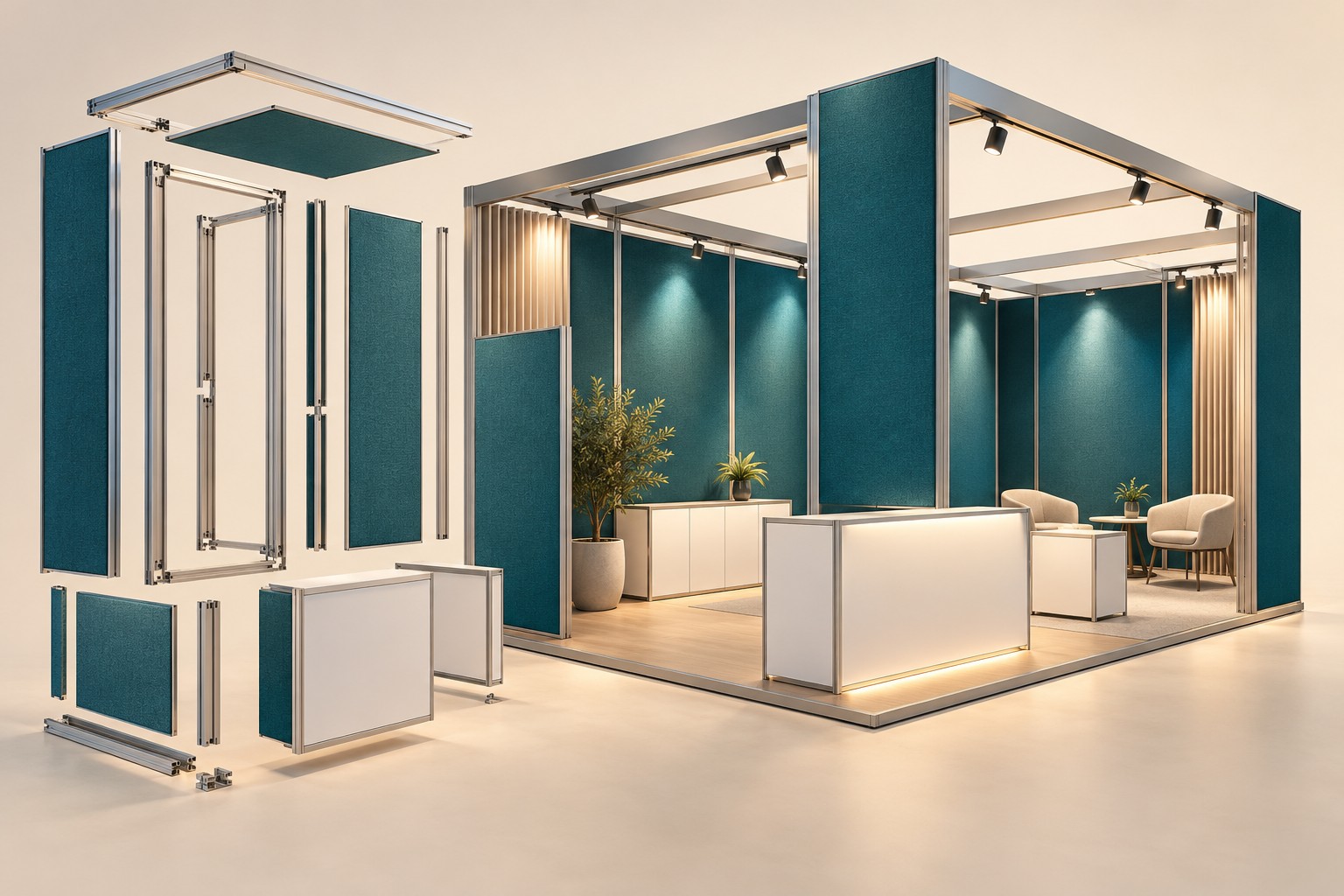
Sliding doors, lift-and-slide systems, windows and façade modules should open, close and lock repeatedly without blocking the aisle. The base, threshold and anchoring details need to tolerate heavy visitor use. A clear demonstration zone lets staff explain mechanisms while other visitors continue moving through the stand.
2. Build a technical comparison wall
Profile sections, corner joints, glazing combinations, seals, handles and hardware should be grouped by application rather than placed as isolated samples. Concise labels and QR-linked technical sheets can show U-values, acoustic performance, security classes and finish options without covering the architecture in text.
3. Separate inspiration from specification
An architectural vignette helps visitors imagine the finished product, while a dedicated specification table supports detailed project discussions. Keeping these functions distinct prevents sample handling, laptops and drawings from making the hero display look untidy.
4. Design glass displays for safety and visual clarity
Large glass panels require engineered supports, protected edges, safe circulation distances and disciplined lighting. Reflections should be controlled so coatings, transparency and colour can be compared accurately. The installation sequence must be agreed before the stand structure closes around the samples.
Two planning checklists that prevent late-stage problems
Product and sales brief
- Exact dimensions and weight of every full-scale unit
- Priority market and buyer type for each system
- Performance data and certification files
- Demonstration sequence and staff responsibilities
- Sample storage and replacement plan
Technical and site brief
- Hall, stand number and open sides
- Floor loading, anchoring and rigging rules
- Power and data for automated systems
- Delivery vehicle and loading-gate timetable
- Glass handling, lifting and installation method
Plan different conversations for architects, fabricators and distributors
A single reception desk cannot serve every buyer journey. Architects may need finish samples, detail drawings and reference projects; fabricators focus on machining, assembly and supply continuity; distributors need territory, pricing and product-range information. The stand layout should make these conversations possible without forcing every visitor into a closed meeting room.
A consent-based lead form can record company type, country, product interest and next action. Staff should agree before the show which enquiries receive samples, a technical meeting, a quotation or a distributor follow-up.
- Qualify the visitor at an open welcome point.
- Demonstrate the relevant full-scale system.
- Move technical visitors to the sample and specification table.
- Use a quieter meeting area for pricing, territory or project discussions.
Tüyap installation and logistics considerations
Full-scale doors, glass and profile displays are heavier and more fragile than ordinary exhibition furniture. Product and stand deliveries must be sequenced so lifting equipment can reach the installation point. Crates, protective frames and reusable transport stillages need a storage or removal plan before opening day.
Organiser rules for height, suspended elements, electricity, fire safety and working hours should be checked against the assigned hall. Final handover should include operation tests, edge protection, cleaning, lighting focus and a documented inspection of every moving unit.
Recommended preparation timeline
| Timing | Priority actions |
|---|---|
| 80–60 days before | Confirm products, weights, demonstration goals, stand layout and budget. |
| 60–40 days before | Approve concept, technical supports, lighting, utilities and organiser submissions. |
| 40–20 days before | Complete local production; coordinate product freight, customs and installation sequence. |
| Final 20 days | Prepare data sheets, QR links, samples, appointments, staff scripts and lead forms. |
Because the event is in November, exhibitors should lock product transport and stand production early enough to avoid compressed approvals and expensive last-minute handling.
How Zana Mimarlık manages an Istanbul stand project
- Review the hall plan, product inventory, commercial targets and budget.
- Develop zoning, product sightlines, full-scale demo points and meeting capacity.
- Prepare production details, structural supports, lighting and organiser files.
- Manufacture locally and coordinate product delivery with the build programme.
- Install, test, clean and hand over the stand before exhibitor merchandising.
- Manage dismantling and identify reusable elements after the show.
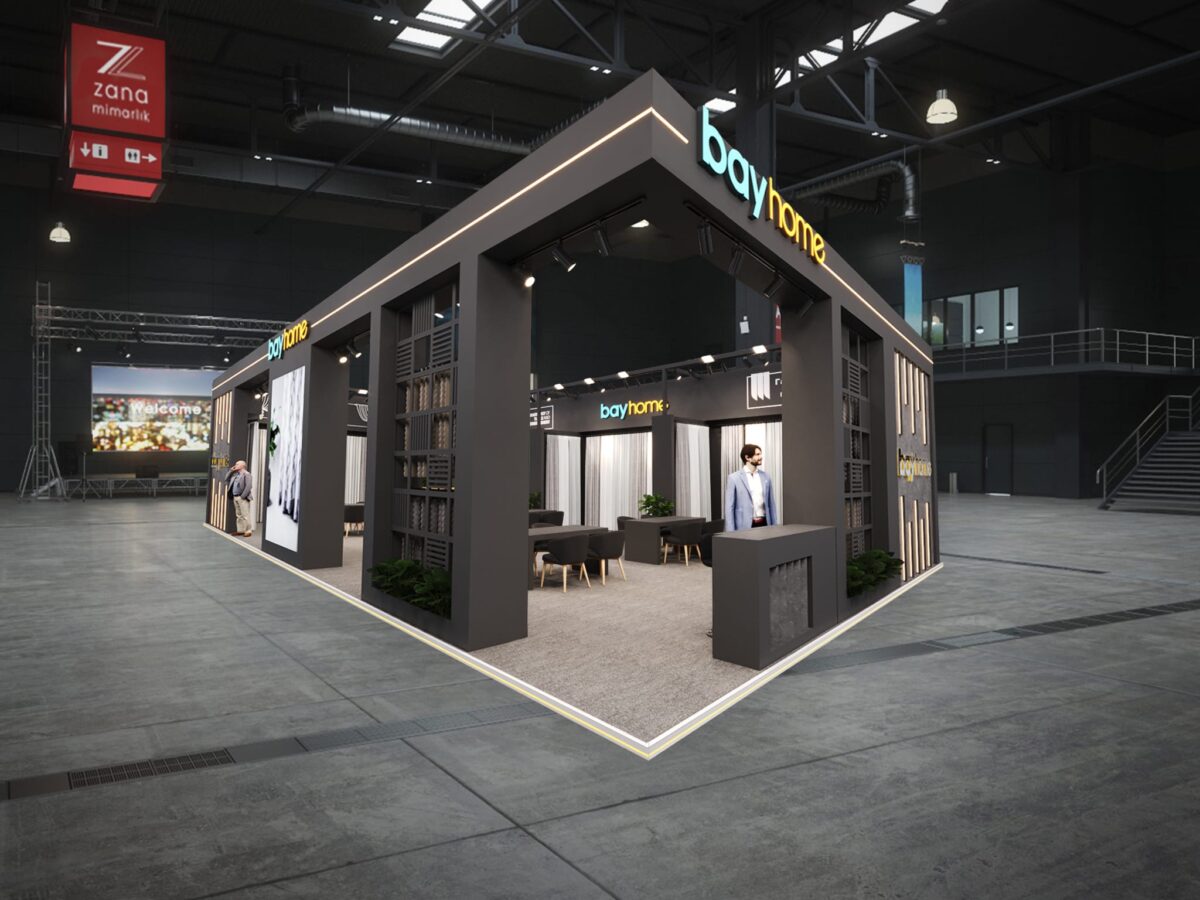
International exhibitors can review our exhibition stand builder in Turkey service and selected projects before requesting a proposal.
Frequently asked questions
When and where is the 2026 fair?
The fairs take place from 21 to 24 November 2026 at Tüyap Fair and Congress Center in Istanbul.
Can full-size windows and doors be installed in the stand?
Yes. Their dimensions, weight, anchoring, opening radius and installation sequence must be included in the technical design.
How early should an overseas exhibitor start?
A practical window is 80 to 60 days before the fair, earlier when customs, heavy glass or automated systems are involved.
Can Zana coordinate the stand and product delivery?
Yes. The stand build programme can be coordinated with the exhibitor’s carrier, product crew and organiser access timetable.
What information is needed for a proposal?
Share the hall and stand plan, open sides, product list and weights, meeting needs, brand files, technical equipment and approximate budget.
Can stand elements be reused?
Selected structures, sample walls, lighting and furniture can be designed for reuse when future stand sizes are known.
Create a stand that turns technical products into buyer confidence
Send your stand plan, product list, target markets and preferred meeting capacity. Our Istanbul team will define a practical design, production and installation scope.
Official fair information: Eurasia Window and Door Fair. Zana Mimarlık is not the event organiser or an official representative; this is an independent exhibitor planning guide.