modular exhibition stand
What Is a Modular Exhibition Stand? Reusable Stand Systems Explained
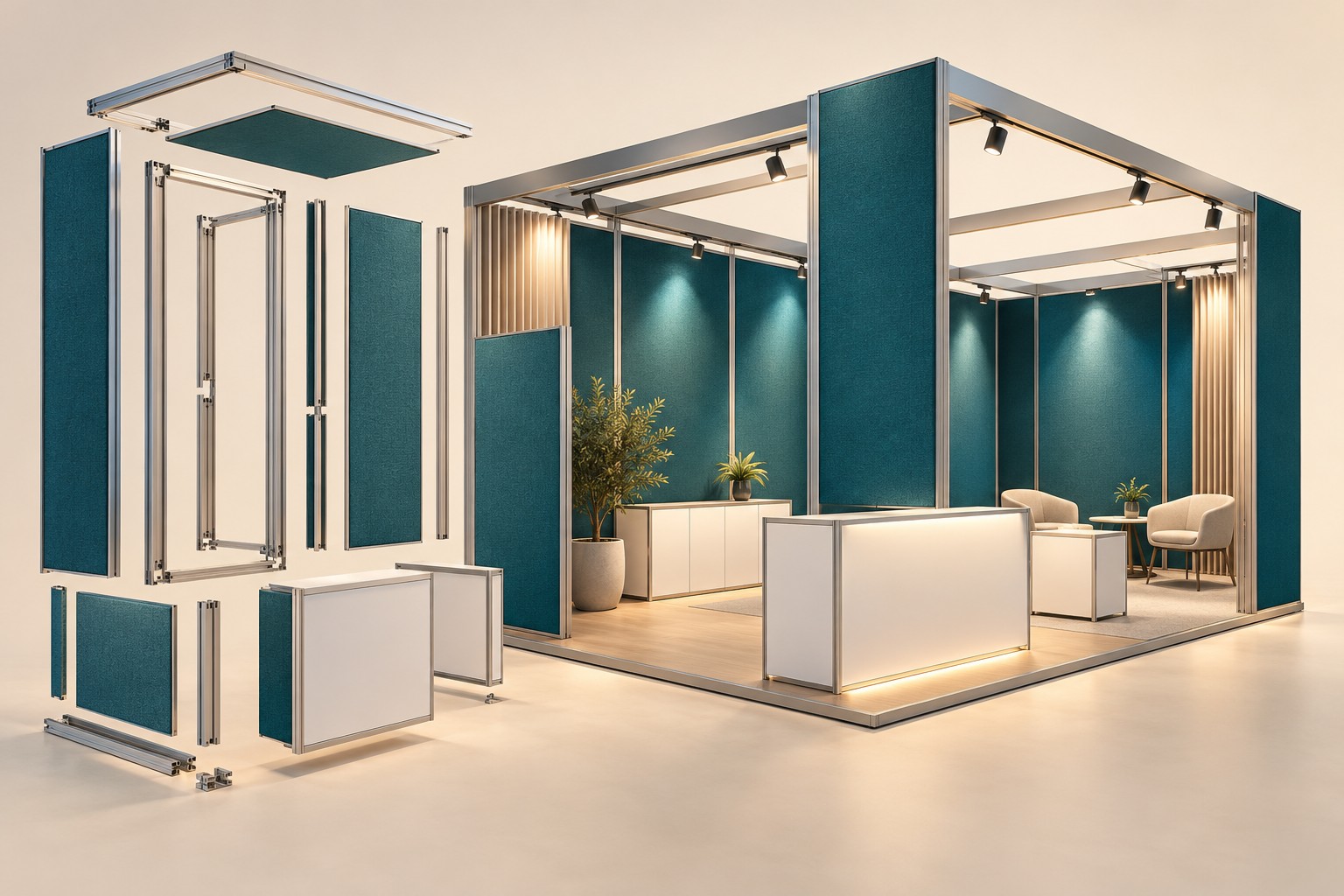
A modular exhibition stand uses a defined system of compatible components to create the structure and display surfaces. The components can support more than one layout, but “modular” does not mean any part will fit any future stand. The value depends on the system, the next floor plan and the condition of the retained items.
Understand which parts form the system
Ask the supplier to identify the profiles or frames, connectors, panels, graphic surfaces and compatible fittings. Separate those system parts from custom-made elements and event-specific graphics. This makes it easier to understand which items can be rearranged, replaced or retained after the exhibition.
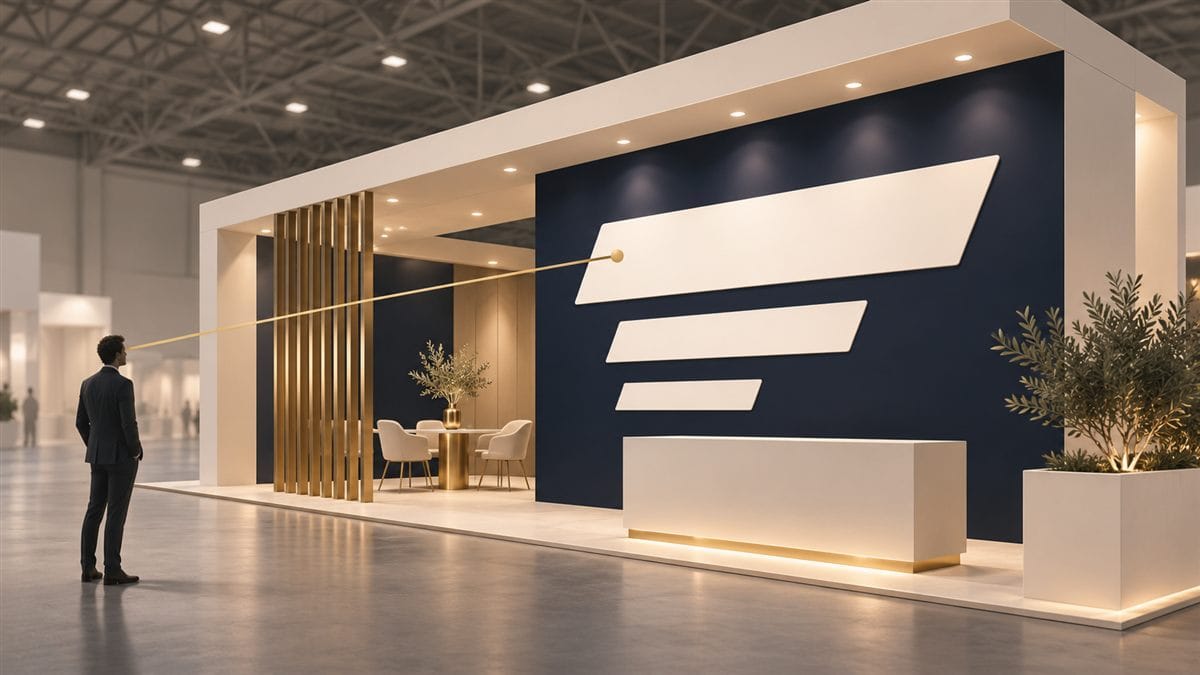
A standard structure can still carry a distinct brand identity through layout, product presentation, graphic hierarchy, lighting and selected custom details. Evaluate the finished design against the visitor experience rather than treating the system name as a complete design specification.
Test a future layout before buying for reuse
Give the designer the next known stand sizes, open sides and venue restrictions. If these are not yet known, define the scenarios the system must reasonably support. Ask for a parts-based layout showing what transfers and what would need to change.
- Structure: Are enough compatible components available for the proposed arrangement?
- Displays: Can the products still be presented with appropriate fittings and access?
- Graphics: Do the surfaces fit the next layout, and will the message remain current?
- Services: Can lighting, AV and cable routes be coordinated for the new venue?
- Condition: What inspection, repair or replacement is needed before the next installation?
Recognise the limits of adaptation
Complex curves, uninterrupted sculptural surfaces or unusual display requirements may call for a custom solution or a hybrid design. A modular system must still be checked for the intended arrangement, fittings and use by the responsible technical parties. Do not assume a previous installation proves that a different configuration is suitable.
Our Döküm Market ALUEXPO 2025 project is an example of a Maksima system used for a branded exhibition stand. It helps show how the system can support the presentation; the project record does not establish that these particular components were reused at another event.
Include storage and handling in the decision
Reusable components need an inventory, suitable packing, clear identification and a defined storage arrangement. Record who owns them, where they go after dismantling and who checks their condition. Keep the relevant assembly information and identify replacements by the correct system reference.
Compare the full programme cost: the initial package or rental, transport, installation, dismantling, storage, repairs and new graphics. Reuse may reduce the need for new materials, but a fixed cost or environmental saving cannot be claimed without comparing the actual scenarios.
Choose around the exhibition programme
A modular option is worth considering when repeatable components suit the brand’s expected spaces and functions. Custom exhibition stands offer another route where form and finish require a different approach. Compare a specific design for each route rather than assuming one category is always cheaper or better.
See our modular exhibition stand service for a discussion based on your products, venue and future participation plans.