sustainable exhibition stand design
Sustainable Exhibition Stand Design: Reuse and Waste Reduction
Sustainable exhibition stand design starts with a useful question: what can still serve the next event after this one closes? A stand described as “green” is not necessarily reusable, and choosing one material does not establish the environmental performance of the whole project. Better decisions need a clear inventory, realistic plans for future events and evidence of what is retained, repaired or discarded.
This guide is a practical brief for exhibitors considering reuse and waste reduction. It does not assign an environmental certification or promise a measured saving. Any public environmental claim should be supported by the actual materials, transport, storage and end-of-use arrangements of the project.
Start with the inventory you already have
Before drawing a new stand, list the frames, counters, display units, lights, screens, graphics and packing cases already available. Record their dimensions, condition, ownership and storage location. A component cannot realistically be included in the next design if it is damaged, inaccessible or still committed to another event.
Ask which elements deserve to be kept for their function, not simply because they exist. A reusable counter that no longer fits the product or visitor flow may require modification. Compare that work with an alternative instead of forcing an unsuitable object into the layout.
Design a kit around plausible future layouts
Put the next known stand plans alongside the current one. Identify elements whose dimensions and connections can accommodate those spaces, and separate them from genuinely event-specific pieces. Consider transport and access as part of the kit: a large assembled object may be reusable in principle but awkward to move, store or bring through a venue door.
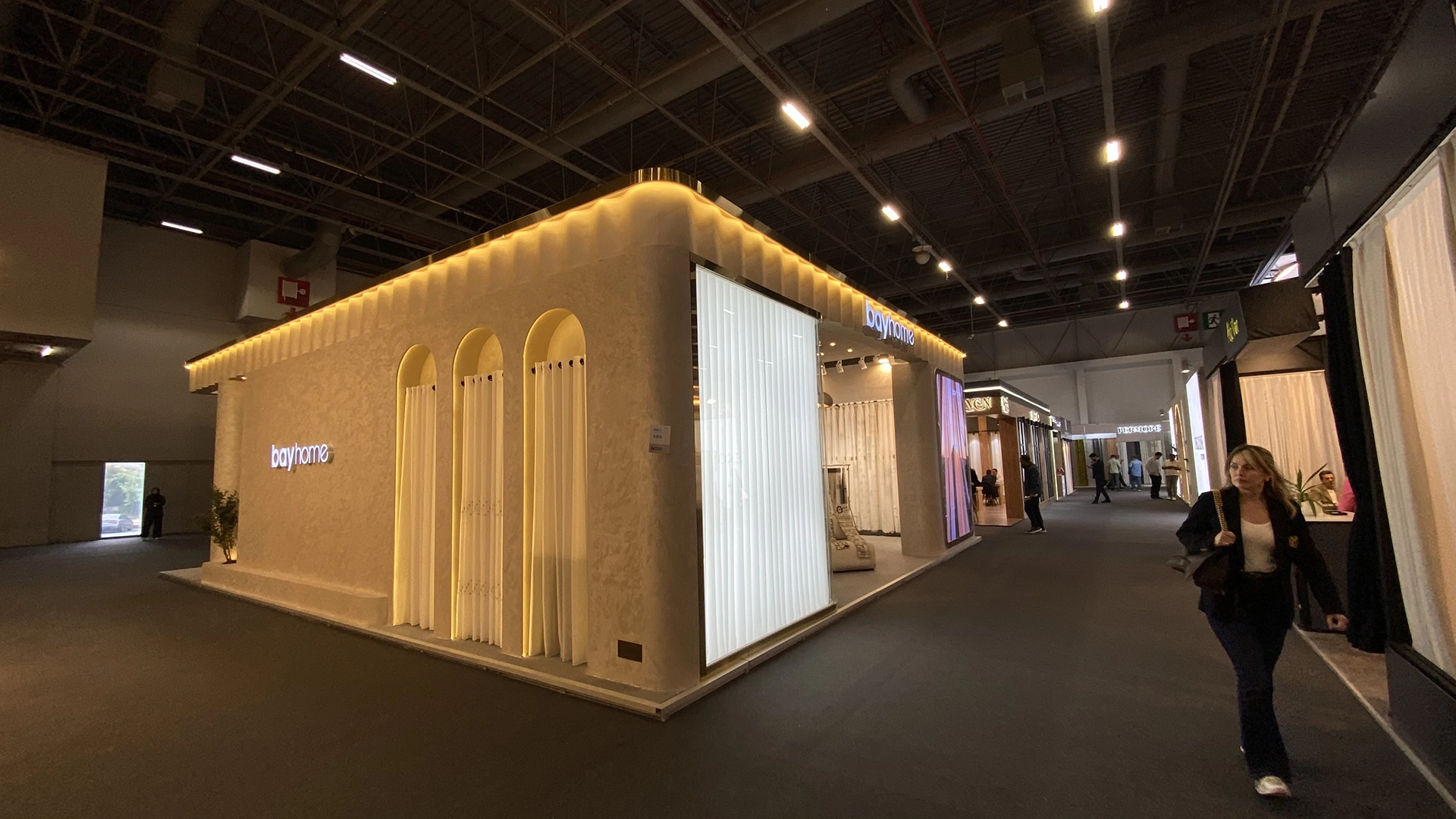
The Döküm Market ALUEXPO 2025 Maxima stand is a completed example of a modular stand approach. Its project page can help a discussion about layout and system choices. It is not evidence that this particular stand has been reused or achieved a quantified environmental saving.
Specify dismantling and repair, not only assembly
Ask how each important junction will come apart after the show. Where appropriate for the design and technical requirements, accessible mechanical connections and replaceable panels can make repair and adaptation more practical than permanently bonding unlike materials. The producer should confirm the suitable connection and material treatment for the actual component.
Mark vulnerable edges and high-contact surfaces. Plan how a damaged finish, door or display shelf can be repaired without replacing a whole assembly. Keep drawings and component labels with the inventory so the next team does not have to reconstruct the design from photographs.
Separate campaign graphics from long-life components
A launch message may be useful for one fair, while the counter or frame behind it may remain useful for several. Give these different lifetimes separate layers. Agree how graphics are removed, what happens to the substrate, and whether a future graphic can use the same support without hiding fixings or ventilation.
Avoid dates and temporary product messages on expensive permanent surfaces unless there is an intentional replacement plan. Do not call a graphic recyclable without checking the actual material and the collection route available after the event.
Include packing, storage and transport in the comparison
Reuse requires someone to receive and protect the components after dismantling. Name that location and owner before production starts. Confirm packing sizes, handling needs, storage conditions and a condition check when items return. Unlabelled parts left in an unspecified store are not a dependable reuse plan.
Local production, consolidated journeys or a lighter system may be worth comparing, but none establishes a lower total impact by itself. A meaningful comparison considers the whole proposed route and number of uses, including refurbishment and storage. Keep cost comparisons separate from environmental claims unless both are measured.
Record what happened after the fair
- Which components returned to the agreed store, and in what condition?
- Which were repaired, adapted, donated or sent to a documented collection route?
- Which items were discarded, why, and how can that be avoided next time?
- What new graphics or replacement parts will the next event actually need?
Use a simple inventory with photographs and responsible contacts. Quantify outcomes only when the quantities and destination records exist. This gives the next project a usable starting point and makes marketing statements more defensible.
Agree the scope before choosing a stand system
Ask a supplier to identify ownership, reuse assumptions, refurbishment, storage, transport and end-of-event responsibilities separately. A rental arrangement and an owned reusable kit have different obligations. Our modular stand service and stand rental service can be considered against your actual event programme.
Organiser service charges and space rental remain separate from the agreed turnkey stand works. For a project-specific assessment, send your stand dimensions, existing inventory and future event plans. We can evaluate the design and delivery scope without assuming that every component or material is automatically suitable for reuse.